


Cannabidiol, commonly known as CBD, is one of the many compounds extracted from the Cannabis Sativa plant. Contrary to popular belief, CBD does not provoke the ‘high’ sensation that is often associated with cannabis as it lacks the psychoactive properties found in another compound named Tetrahydrocannabinol (THC).
Over the past few years, increased attention has been drawn towards the potential health benefits of CBD, which reportedly include natural pain relief, anxiety reduction, and notably, the ability to combat inflammation.
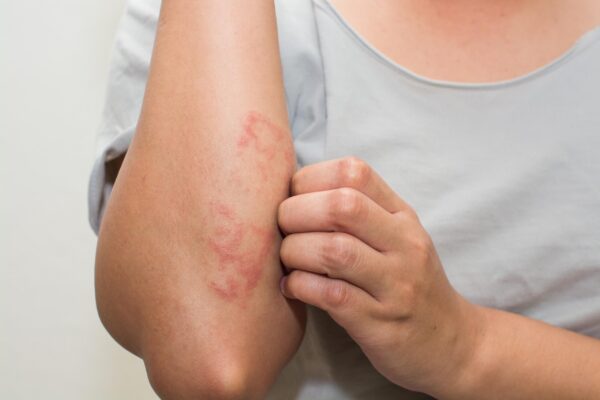
Eczema, also known as atopic dermatitis, is a persistent skin condition that induces inflammation, resulting in itchy, red, and swollen skin. It is a fairly common condition that can affect anyone, from newborns to adults, with approximately 10% of children and 2-3% of adults worldwide currently diagnosed with the condition.
Eczema’s origins remain largely elusive to scientists, though it is broadly accepted that the condition arises from a complex interplay of both environmental and genetic factors.
Recent studies and anecdotal evidence have pointed to CBD as a potential effect for eczema relief. Various pieces of research reveal that topical application of CBD-enriched creams or ointments can markedly alleviate eczema symptoms, including pruritis (itchiness) and inflammation
This beneficial effect is believed to stem from CBD’s interaction with the body’s endocannabinoid system (ECS), a system of receptors dispersed throughout the body – including the skin – and involved in governing numerous physiological processes such as inflammation response, pain sensation, and immune regulation.
CBD can connect to these ECS receptors and modulate their activity, hence fostering an environment conducive for combating skin conditions. This occurs in several ways. Firstly, CBD is capable of impeding the production of pro-inflammatory cytokines which are large groups of proteins that trigger responses against infections but could also instigate skin inflammation. By doing so, CBD helps to alleviate unnecessary and chronic inflammation, thereby lessening the severity of eczema.
Secondly, CBD is recognized for its analgesic (pain-relieving) properties which come into play by interacting with the receptors involved in pain sensation. The result is an overall decrease in discomfort – a welcome relief for individuals suffering from chronic skin conditions such as eczema.
Moreover, its anti-pruritic abilities help to curb the agonizing itchiness generally experienced by eczema patients, offering further symptom relief. CBD thus presents an alternative or adjunct treatment that modulates the body’s immune response, alleviates discomfort, and reduces inflammation, potentially enhancing the quality of life for those living with eczema.
Reference
- Nickles MA, Lio PA. Cannabinoids in Dermatology: Hope or Hype? Cannabis Cannabinoid Res. 2020;5(4):279-82.
- Baswan SM, Klosner AE, Glynn K, Rajgopal A, Malik K, Yim S, et al. Therapeutic Potential of Cannabidiol (CBD) for Skin Health and Disorders. Clin Cosmet Investig Dermatol. 2020;13:927-42.
- Cohen G, Jakus J, Baroud S, Gvirtz R, Rozenblat S. Development of an Effective Acne Treatment Based on CBD and Herbal Extracts: Preliminary In Vitro, Ex Vivo, and Clinical Evaluation. Evid Based Complement Alternat Med. 2023;2023:4474255.
- Martins AM, Gomes AL, Vilas Boas I, Marto J, Ribeiro HM. Cannabis-Based Products for the Treatment of Skin Inflammatory Diseases: A Timely Review. Pharmaceuticals (Basel). 2022;15(2).
- Olah A, Markovics A, Szabo-Papp J, Szabo PT, Stott C, Zouboulis CC, et al. Differential effectiveness of selected non-psychotropic phytocannabinoids on human sebocyte functions implicates their introduction in dry/seborrhoeic skin and acne treatment. Exp Dermatol. 2016;25(9):701-7.
- Peyravian N, Deo S, Daunert S, Jimenez JJ. The Anti-Inflammatory Effects of Cannabidiol (CBD) on Acne. J Inflamm Res. 2022;15:2795-801.
- Lipman ZM, Labib A, Yosipovitch G. Current Clinical Options for the Management of Itch in Atopic Dermatitis. Clin Cosmet Investig Dermatol. 2021;14:959-69.

